Contact us

Call us: (800) 667-3220 

Email us: info@ADMET.com

Ask an Engineer form

Request a quote form

Receive an email when a new article is posted

Your email:

About ADMET

  • Founded by engineers in 1989.
  • Offers advanced materials and product testing systems that are reliable and easy to use.
  • Willing to modify our systems to meet your needs.
  • On-site service and calibration team includes over 100 individuals in over 40 locations.
  • On-site and web based training.
  • Unlimited phone and email support.

Authors

Richard Gedney, Founder

Orick Kelley, Sales Engineer for metals, concrete, etc...

Debbi Cohen, Sales Engineer, medical materials and finished device testing applications

Andrew DeWolfe, Sales Engineer for plastics, foam, textiles, etc... 

Current Articles | RSS Feed RSS Feed

Torsion Testing Conical Luer Fittings and Connectors for Medical Devices

  | Share on Twitter Twitter | Submit to Digg digg it |  Add to delicious  delicious |  Submit to StumbleUpon StumbleUpon |  Share on LinkedIn LinkedIn | Submit to Reddit reddit 

Torque, also called moment or moment of force, is the tendency of a force to rotate an object about an axis or pivot. Torque is rotational force. Twisting the female to male fitting, to remove or replace the connection, is an example of applying torque. The amount of torque developed is proportional to the force applied and to how far from the center of the rotation the force is applied.

When making manufacturing decisions for medical device applications and other material testing applications it is important to know the product's torque and angle capacity. How easy or difficult it is to twist a cover, connector, or switch is important to the practitioner using the product. Biopsy needles are inserted and then twisted to remove a sample. If the value of force needed to insert the needle was not calculated precisely, it could effect the practitioner's ablity to retrieve a proper sample. If a conical fitting was not tightened to it's full torque capacity, there may be liquid leakage, air leakage, stress cracking, and/or separation.

ADMET suggests the following systems to perform a range of static and fatigue torsion tests. 


Vertical Torsion Tester


  vertical torsion tester

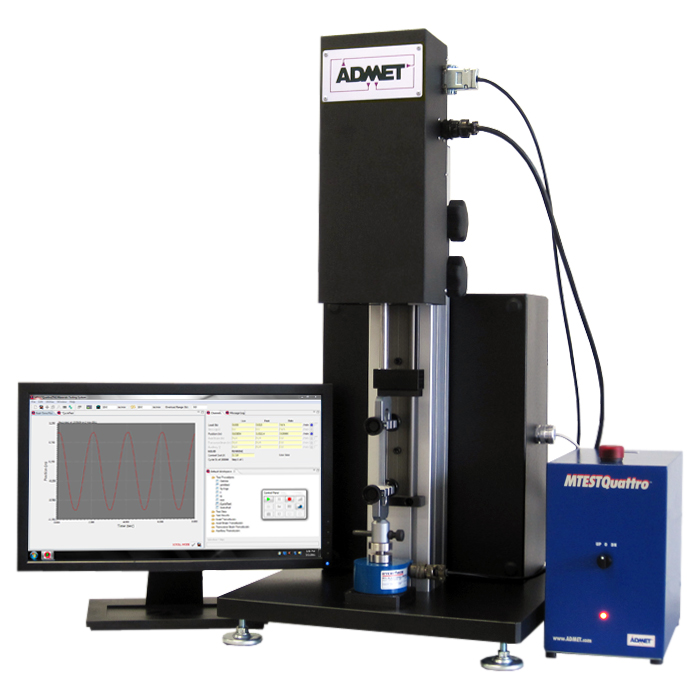
 Vertical eXpert 81T 20 Nm Torsion Tester


Torsion Tester


Horizontal eXpert 81T 2Nm Torsion Tester

eXpert 81T Torsion Testing Systems

  • Vertical or Horizontal orientation
  • Tabletop Torsion Testers// 0.1Nm to 500Nm(4,500 in-lb)
  • Floor standing Torsion Testers //to 11,000 Nm (100,000 in-lb)
  • Employ a linear slide design to allow:
    1. maximum torsional stiffness
    2. minimal axial friction
  • A reaction torque transducer is attached to a movable tail stock mounted on a linear slide
  • Interchangeable torque transducers available
  • Linear slide dimensions sized to accommodate specimen lengths
  • The tail stock can be left free floating or clamped during testing
  • Most systems have unlimited rotation in the clockwise and counter clockwise directions
  • Ability to apply axial forces through a dead weight pulley system or optional linear actuator
  • Optional linear displacement transducer to measure tailstock movement
  • Speed range - determined by customer input.  Torsion fatigue testing systems are capable of performing sine, square or sawtooth waveform amplitude control to 20 Hz
  • Data export capability - .csv, ascii delimited, .jpg, bitmap image
  • FULLY Customizable-The length of the test bed, servo motor, and gearing is modified to accommodate varying specimen lengths, capacities and test speeds.
Biaxial Tension/Compression/Torsion systems are available. 

 Grips and Fixtures
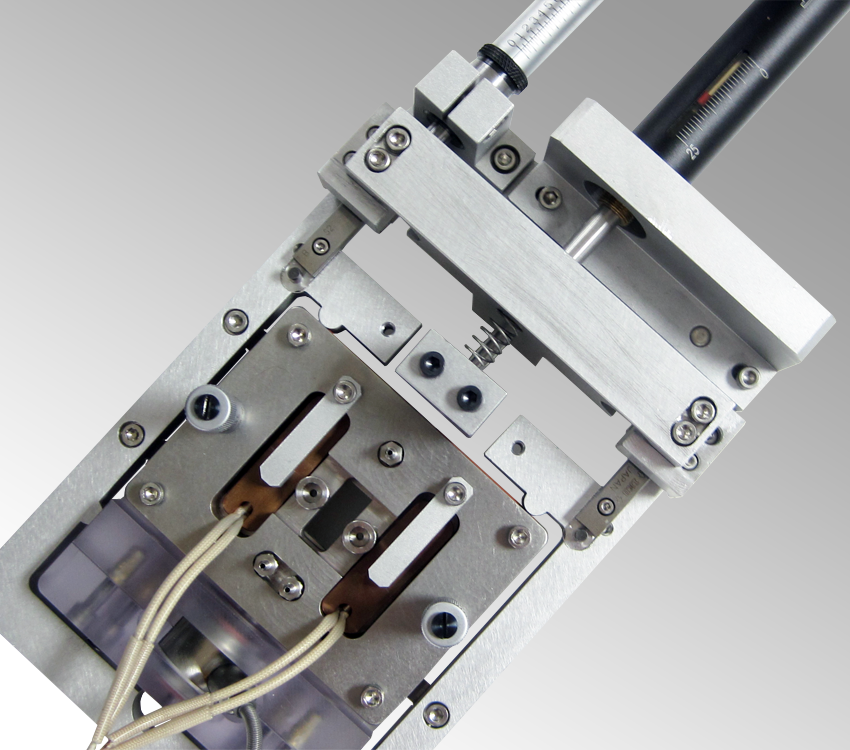
eXpert 81T Torsion Testers can be equipped with collets, chucks and drive sockets to hold and twist your specimens. 

  • ADMET will also machine custom adapters to accommodate unusual shapes and sizes
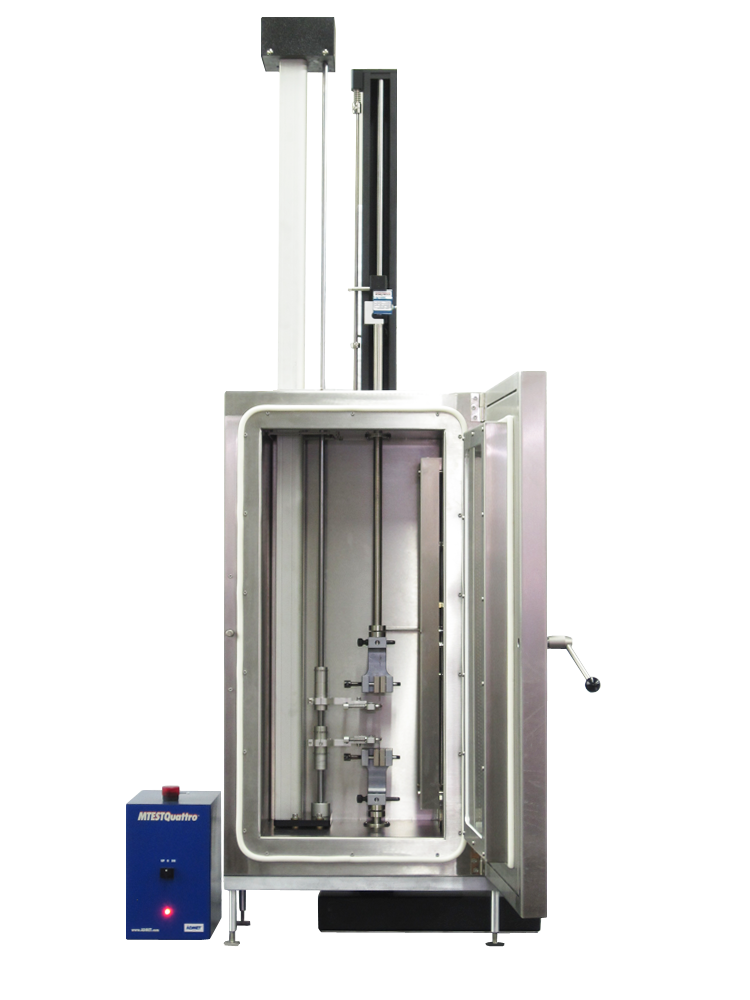
  • Environmental baths with heating and cooling systems meet aerospace and medical device test requirements.

 collet

ASTM and ISO Torsion Test Standards

ISO 594/1-1986 describes the dimensions, testing profile, and parameters for testing conical fittings with a 6% (luer) taper for hypodermic syringes, needles, and certain other medical equipment, such as transfusion and infusion sets. This standard covers rigid and semi-rigid materials for guaging and performance.

  • Several of the mechanical tests in section 5, figures 4+5, require torque testing. In ISO 594-1, an axial force of 27.5N(5lbs) is applied for 5 seconds while applying 0.1Nm torque load to an angle of 90 degrees.

Recommended system for sections 5.2.1, 5.3.1.1, 5.5.1 is an ADMET eXpert 81T Torsion Tester with MTESTQuattro Torsion PC Based controller or with an eP Torque digital controller, dead weight pulley, and grips. Request a quote

ASTM F1541- External Skeletal Fixation Devices This test method has many different annexes for testing Fixator connectors, joints, rings, pins, sub-assemblies and constructs. 

Recommended systems- 

  • 81T Torsion Tester or
  • eXpert 7600 single column testing frame or
  • eXpert 2600  Biaxial or Triaxial Tester.
  • MTESTQuattro Torsion, MTESTQuattro, or MTESTQuattro Integrated. Depending on which annexes you would like to perform.
  • Request a quote or Ask an Engineer a Question

ASTM A938-07 - the torsional strength of wire.

Recommended system 81T Torsion Tester, 12Nm, MTESTQuattro Torsion, Collet Chuck, 5c Collet, Dead Weight Pulley System Request a Quote

Request Torsion Testing Specifics...

More ADMET Videos... 

More ADMET Specifications... 

Ask an engineer a question

Contact ADMET at 1-800-667-3220 or sales@ADMET.com for more information on all of our Testing Systems. 


All Posts