Posted by Richard Gedney on Fri, Jul 16, 2010 @ 09:45 AM
In the ASTM acceptance standard for testing rubber surgical gloves (D3577) and rubber medical gloves (D3578), made of latex, vinyl, and nitrile. The standard describes the standard size, material properties, physical and mechanical property acceptance levels, aqueous protein and antigen protein content, and visual inspection required for a glove to be used in a medical procedure. Other relevant standards include ASTM D6319, ASTM D5250, EN 455-2, ISO 11193-1:2002, and ISO/AWI 11193-2.

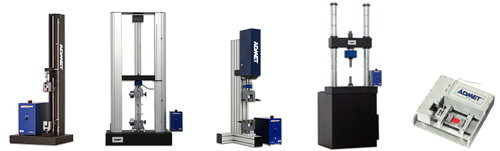
ADMET Single Column Testing and Dual Column Testing Systems can be used to test the physical and mechanical properties of the gloves.
Summary:
Classification
Type 1 - Gloves compounded primarily from natural rubber latex.
Type 2 - Gloves compounded from a rubber cement or from synthetic rubber latex
Sampling reference- ISO2859 and Table 1-ASTM D3577 full spec.
Referee Tests;
- Sterility Test
- Freedom from Holes
- Physical Dimensions Test
- Precision and Bias
- Physical Requirements Test
- Gloves will be tested according to ASTM D412.(Testing video)
- The Gloves are then put in heating chambers and undergo Accelerated Aging according to ASTM D573. (One can follow option a or b)
a)70 +-2 degrees Celsius for 22+-0.3 hours.
b)100+-2 degrees Celsius for 22+-0.3 hours.
After accelerated aging, the gloves must be tested to determine Tensile Strength and Elongation. The ideal limits are in the Table below.
| Type |
Tensile Strength |
Elongation |
500% Elongation |
|
Type 1 Before Aging
|
24 MPa, min |
750%, min |
5.5MPa, max |
|
Type 1 After Aging
|
18 MPa, min |
560%, min |
|
|
Type 2 Before Aging
|
17MPa, min |
650%, min |
7.0MPa, max |
|
Type 2 After Aging
|
12MPa, min |
490%, min |
|
- Precision and Bias are specified in ASTM D412.
- Powder Free Gloves residue determined by ASTM D6124.
- Aqueous Extractable Protein Content determined by ASTM D5712.
- Powdered Glove residue determined by ASTM D6124.
- Antigenic Protein Content determined by ASTM D6499.
- Dimensions and Tolerance Chart labeled Table 2 describes the length, width, and thickness sizes that are acceptable to this standard.
Equipment required:
1. Universal testing machine (tensile testing machine) with these minimum specifications: Single Column eXpert 7600 series, Dual Column eXpert 2600 series
A. Servo-controlled to keep a constant rate of speed during the test (+/- 2 inches/min)
B. At least 30 inches of crosshead travel or more for high elongation materials.
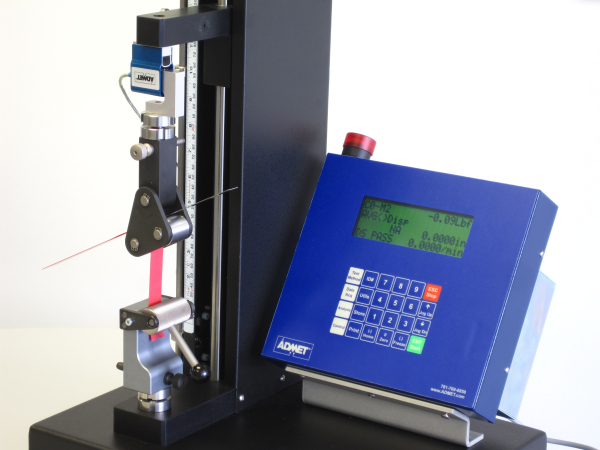
C. MTESTQuattro PC Based data acquisiton, data analysis, and reporting software. MTESTQuattro allows viewing real time XY plot, data report showing a description of the glove, tensile strength, elongation, and comments, as well as a statistical summary of multiple samples following the same test procedure.
D. Video or laser extensometers may be employed to increase the accuracy of the elongation calculations.
This is a summary of the standard. For a full, detailed description go to the ASTM website.

Click on these links for more information...
More Testing News
More Testing Videos
More Testing Specifications
Request a Quote
Ask an Engineer a question
ADMET 1-800-667-3220 www.ADMET.com
Posted by Andrew DeWolfe on Wed, Apr 28, 2010 @ 01:23 PM
The tear strength of thermoset rubbers, thermoplastic elastomers, and silicones can be measured according to specification ASTM D624. The test measures the strength required to initiate a tear in a material. D624 describes multiple different types of sample shapes that can be tested in a standard universal testing machine (tensile testing machine). Usually materials that are tested to D624 are also tested according to specification ASTM D412 to measure the tensile strength and elongation. If you are going to perform this test, you should read the entire specification from ASTM. This is a quick summary to decide if this test is right for you, and to point out what equipment you need to perform the test.
This video shows how to perform a tear strength test:
Test Procedure:
- Cut or injection mold your material into one of the tear shapes shown in the specification. Specimen B and C are the most common.
- Measure the width of the specimen
- Load the specimen into tensile grips.
- Begin the test by separating the tensile grips at a speed of 20 inches per minute
- End the test after sample break (rupture)
Analysis obtained:
- Tear Strength - lb/in unit. (Peak load observed during test / thickness of material)
Equipment required (same as ASTM D412 machines):
1. Universal testing machine (tensile testing machine) with these minimum specifications:
- Servo-controlled to keep a constant rate of speed during the test of at least 20in/min (+/- 2 inches/min)
- At least 30 inches of crosshead travel or more for high elongation materials
- Most small and common 1kN (225 pound) are fine for this test (see ADMET eXpert 7601).
2. Software or suitable electronics are required to operate the machine and to take the measurements. Basic systems will provide the raw data, and stress-strain charts. Using these sources of data, you can calculate tear strength yourself (peak load / material thickness). However, fully PC based systems have the capability to calculate all of these automatically such as our MTESTQuattro testing software which has built in support for ASTM D624. Using this system would provide you with the tear strength immediately after performing the test.
3. Tensile grips hold your specimen during the test as it is being pulled apart. Rubbers and elastomers usually lend themselves to being easily held in a variety of grip designs such as manual vise grips, pneumatic grips, wedge grips, or eccentric roller designs.
Click here if you are also interested in ASTM D412 tensile strength and elongation testing.
ASTM D624 Die C Specimen in Tensile Grips

ADMET eXpert 7601 Single Column Testing Machine
Click on these links for more information...
More Testing News
More Testing Videos
More Testing Specifications
Request a Quote
Ask an Engineer a question
ADMET 1-800-667-3220 www.ADMET.com
Posted by Andrew DeWolfe on Mon, Mar 15, 2010 @ 03:38 PM
ASTM D1414 (D 1414) covers multiple properties of O-Rings. Part of the specification includes tension testing for determining the breaking force, tensile strength, and ultimate elongation of an o-ring. The tension test is intended to be performed on a universal testing machine (tensile testing machine). If you are going to perform this test, you should read the entire specification from ASTM. This is a quick summary to decide if this test is right for you, and to point out what equipment you need to perform the test.
Here is a short video of the test:
Test Procedure:
1. Lubricate the grip spools with oil (not required if doing step # 4)
2. Load the o-ring on both the upper and lower spools
3. Begin the test by separating the grips at a speed of 20 inches per minute
4. Rotate one spool one revolution per six inches of travel (not required if doing step # 1)
5. End the test after sample break (rupture)
Analysis obtained:
1. Breaking Force
2. Tensile Strength
3. Ultimate Elongation
Equipment required:
1. Universal testing machine (tensile testing machine) with these minimum specifications: (similar to those in ASTM D412)
A. Servo-controlled to keep a constant rate of speed during the test (+/- 2 inches/min)
B. At least 30 inches of crosshead travel or more for high elongation materials
C. Most small and common 1kN (225 pound) load capacity machines will work for the loads of the materials tested to this specification
D. All of our eXpert 2600 series dual column machines meet these requirements, and it is also common to use our single column eXpert 7601 XL with 53 inches of crosshead travel.
2. ASTM D1414 requires special grips. These grips have interchangeable spools with various diameters for a wide variety of o-rings. The spools rotate freely on a pin extending from the grip. If using the motorized version, the bottom grip and spool is connected to a small variable speed electric motor to enable rotation during the test to minimize stresses. Other more primitive and costly systems have been employed that generate rotation from the upward movement of the crosshead. However, the optional motorized version is easier to use and is usually less expensive.

ADMET Motorized ASTM D1414 O-Ring Fixture
3. If you don't want to use the motorized fixture, the specification allows you to lubricate the spools instead. In this case, you would just use two of the upper grips.
Click on these links for more information...
More Testing News
More Testing Videos
More Testing Specifications
Request a Quote
Ask an Engineer a question
ADMET 1-800-667-3220 www.ADMET.com
Posted by Andrew DeWolfe on Tue, Feb 23, 2010 @ 10:19 AM
ASTM D412 (D 412) covers the tensile properties of thermoset rubbers and thermoplastic elastomers. The specification describes two test methods, A and B. Method A is common and can be performed on a universal testing machine (tensile testing machine). If you are going to perform this test, you should read the entire specification from ASTM. This is a quick summary to decide if this test is right for you, and to point out what equipment you need to perform the test.
Test Procedure:
1. Cut or injection mold your material into a "dumbbell" shaped specimen.

2. Load the specimen into tensile grips.
3. Attach the optional extensometer to the sample
4. Begin the test by separating the tensile grips at a speed of 20 inches per minute
5. End the test after sample break (rupture)
Analysis obtained:
1. Stress at user-specified extension or elongation
2. Tensile Yield Stress
3. Tensile Yield Strain
4. Tensile Strength at Rupture
5. Elongation at Rupture
Equipment required:
1. Universal testing machine (tensile testing machine) with these minimum specifications:
A. Servo-controlled to keep a constant rate of speed during the test (+/- 2 inches/min)
B. At least 30 inches of crosshead travel or more for high elongation materials
C. Most small and common 1kN (225 pound) load capacity machines will work for the loads of the materials tested to this specification
All of our eXpert 2600 series dual column machines meet these requirements, and it is also common to use our single column eXpert 7601 XL with 53 inches of crosshead travel.
2. An extensometer is optional but recommended. We recommend one for two reasons. First, dumbbell specimens do not have uniform widths which cause errors when both the wide and narrow sections of the dumbbell shaped specimen elongate at different rates. Secondly, elongation is usually an important design characteristic of rubbers and elastomers so an extensometer can be used to improve accuracy of the measurement.
3. Software or suitable electronics are required to operate the machine and to take the measurements. Basic systems will provide the raw data, and stress-strain charts. Using these sources of data, you can determine and calculate all of the analysis listed above. However, fully PC based systems have the capability to calculate all of these automatically. For example, our MTESTQuattro testing software has built in support for ASTM D412 and all of these calculations are provided immediately after performing the test.
4. Tensile grips hold your specimen during the test as it is being
pulled apart. Quite often, hard specimens are difficult to hold properly as premature breakage and slippage can be common. However, rubbers and elastomers usually lend themselves to being easily held in a variety of grip designs such as manual vise grips, pneumatic grips, wedge grips, or eccentric roller designs. The most common and easy to use grips are manual vise or pneumatic grips with rubber coated or serrated insert faces.
This is the original article, a new version has been posted here.
Click on these links for more information...
More Testing News
More Testing Videos
More Testing Specifications
Request a Quote
Ask an Engineer a question
ADMET 1-800-667-3220 www.ADMET.com