All concrete testing laboratories produce essentially the same compressive strength test reports. So, how can a laboratory manager create a distinctive product while boosting profitability?
Speed Control
Concrete exhibits loading-rate sensitivity relative to compressive strength,1,2 so ASTM C39, "Standard Test Method for Compressive Strength of Cylindrical Concrete Specimens,"3 limits loading rate to 0.2 to 0.3MPa/sec (28 to 42 psi/sec). This helps ensure consistency within and among laboratories.
Almost 70% of the testing machines now in service are manually operated. The operator is therefore required to manually adjust a valve to achieve a loading rate within specification. Unfortunately, these adjustments can be inaccurate, particularly because only about half of the concrete testing machines now in service have any provision to indicate load rate. A fifth of testing machines now in service do have digital indicators that provide loading rates, but the attained rates aren't verifiable after the tests.
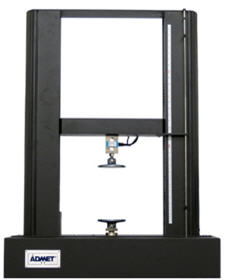
Figure 1 - ADMET MegaForce II Automatic Concrete Testing System.
A Step in the Right Direction
To address the shortcoming of nonverifiable loading rates, manually operated machines are now being offered that calculate and report the average loading rate according to ASTM C39 requirements and can generate load and stress versus time curves to verify that a test was performed according to specification. They also offer digital indicators that provide a live indication of loading rate. These systems don't, however, eliminate the possibility that an operator could perform tests at rates exceeding ASTM C39 limits.
More Control
There is clearly a need for an automatic concrete testing system that can control loading rate. Control systems used on conventional universal testing machines, however, aren't appropriate for concrete testing applications. Most concrete testing machines in operation are hydraulically actuated and operate at oil pressures as high as 68.9 MPa (10,000 psi). In contrast, conventional servo-hydraulic testing systems operate at maximum pressures of about 31 MPa (4500 psi). These systems therefore have large-and very expensive-actuators, and their high cost precludes them from widespread use in concrete testing.
Over the past six years, ADMET, Inc. has offered a low-cost, reliable, automatic concrete testing system that addresses these issues. As shown in Fig. 1, the MegaForce II automatic testing system works with compression machines that operate to 68.9 MPa (10,000 psi), prevents the operator from overriding the testing process, and provides verification of loading rates-all for 50 to 75% less cost than for a comparable servo-controlled testing machine. The automatic testing system can be installed on new machines or retrofitted to existing machines, generating further cost savings.
References
1. Carino, N.J.; Guthrie, W.F.; Lagergren, E.S.; and Mullings, G.M. "Effects of Testing Variables on the Strength of High-Strength (90 MPa) Concrete Cylinders," High-Performance Concrete: Proceedings, ACI International Conference, Singapore, 1994 (SP-149), V.M. Malhotra, ed., American Concrete Institute, Farmington Hills, MI, 1994, pp. 589-632.
2. Han, N., and Walraven, J.C., "Properties of High-Strength Concrete Subjected to Uniaxial Loading," High-Performance Concrete: Proceedings, ACI International Conference, Singapore, 1994 (SP-149), V.M. Malhotra, ed., American Concrete Institute, Farmington Hills, MI, 1994, pp. 269-288.
3. ASTM C39/C39M-05e1, "Standard Test Method for Compressive Strength of Cylindrical Concrete Specimens," ASTM International, West Conshohocken, PA, 2005, 7 pp.
Click here for more information on ADMET's concrete testing systems.
Fiber reinforced concrete (FRC) is finding increased use in construction. FRC offers several advantages over rebar or wire mesh reinforced concrete including increased crack resistance, ductility, energy absorption, impact resistance and residual strength. FRC can also significantly lower materials and labor costs compared to rebar or wire mesh reinforced concrete.
ASTM C1609, Standard Test Method for Flexural Performance of Fiber-Reinforced Concrete (Using Beam With Third-Point Loading), is one specification governing the testing of Fiber Reinforced Concrete Beams.
C1609 requires the use of a closed-loop, servo controlled compression testing machine. The test is run at specified net deflection rates as measured at the mid-span point of the beam.
The testing machine must be capable of controlling at very slow speeds. Electromechanical testing machines are best suited for this type of application.
Figure 1 shows a typical test setup to perform the C1609 test. It is a third-point loading fixture with two support points and two loading noses on the top of the beam. A rectangular jig surrounds the beam and is mounted on the beam's neutral axis directly over the supports. Two displacement transducers, one on each side of the beam, are mounted mid-span to measure beam deflection. The output of each transducer is averaged together to provide the net deflection measurement. This configuration ensures accurate measurement of mid-span deflection and minimizes errors due to concrete specimen twisting or seating in the supports.
Figure 1. Typical ASTM C1609 Test Fixture.
The test is run at a specified net deflection rate to a net deflection of L/600 (where L is the support span distance). After which it can be run at a higher specified net deflection rate until the specified endpoint.
Table 1. ASTM C1609 Net Deflection Testing Rates.
ASTM C1609 data analyses include 1st Peak Strength, Ultimate Strength, Residual Strength at L/600, Residual Strength at L/150 and Toughness, which is the area under load versus net deflection curve from 0 to L/150.
Figure 2 - Stress versus net deflection curve with ASTM C1609 analysis results.
Click here for more information on ADMET's concrete testing systems.