Contact us

Call us: (800) 667-3220 

Email us: info@ADMET.com

Ask an Engineer form

Request a quote form

Receive an email when a new article is posted

Your email:

About ADMET

  • Founded by engineers in 1989.
  • Offers advanced materials and product testing systems that are reliable and easy to use.
  • Willing to modify our systems to meet your needs.
  • On-site service and calibration team includes over 100 individuals in over 40 locations.
  • On-site and web based training.
  • Unlimited phone and email support.

Authors

Richard Gedney, Founder

Orick Kelley, Sales Engineer for metals, concrete, etc...

Debbi Cohen, Sales Engineer, medical materials and finished device testing applications

Andrew DeWolfe, Sales Engineer for plastics, foam, textiles, etc... 

Current Articles | RSS Feed RSS Feed

ADMET to exhibit at NASS Annual Meeting October 2010

  | Share on Twitter Twitter | Submit to Digg digg it |  Add to delicious  delicious |  Submit to StumbleUpon StumbleUpon |  Share on LinkedIn LinkedIn | Submit to Reddit reddit 

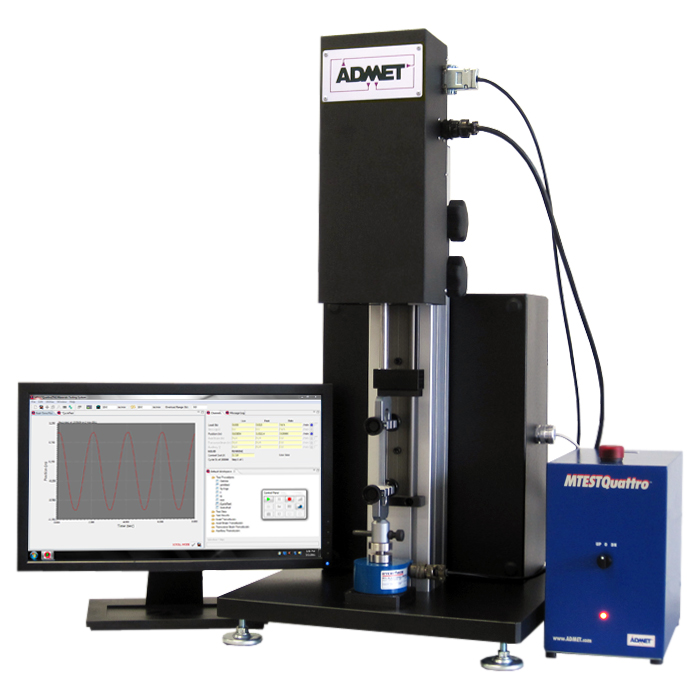
Orlando, FL- October 5, 2010 – ADMET, Inc., a provider of integrated materials testing systems, is showcasing their line of single, dual, and biaxial testing systems at the North American Spine Society’s 25th Annual Meeting. Booth #1891 The testing systems that will be featured are commonly used for testing biomedical materials and medical devices that require both static and dynamic testing profiles as well as uniaxial, biaxial, and long term fatigue.

ADMET testing systems are critical to ensuring the integrity of the mechanical parts of spinal implants, bone screws and plates, bone cement, and other fixation devices. ADMET’s MTESTQuattro software allows the user a flexible, easy to use interface, sophisticated analysis, and presentation quality reporting capability.  ADMET testing systems comply with many ASTM specifications, including F1717, F1798, F2077, F2267, F543, F1541, F382, F384, F1264, and more.

See http://info.admet.com/specifications to see further description.

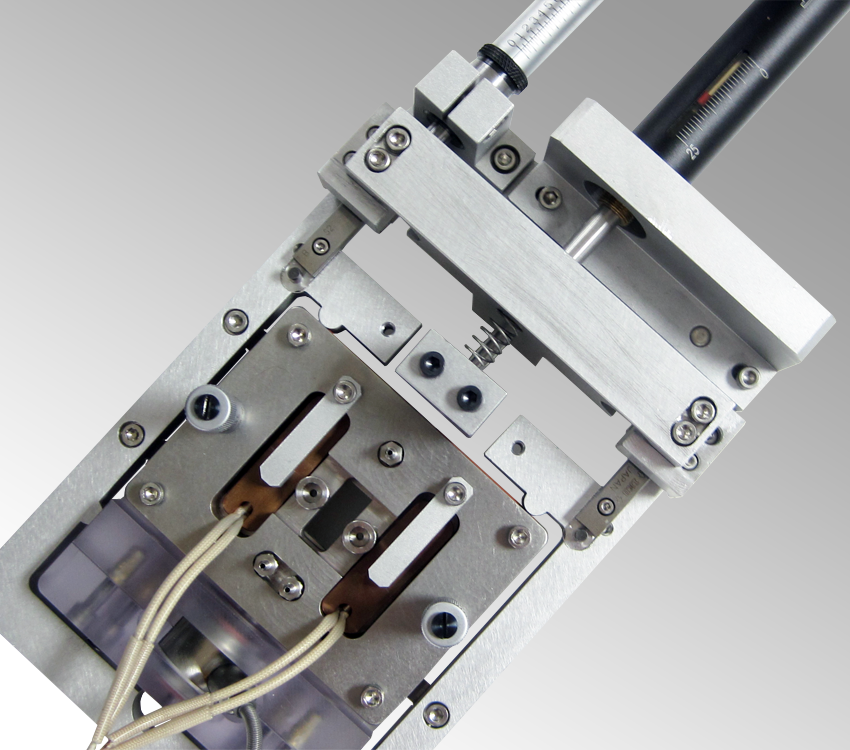
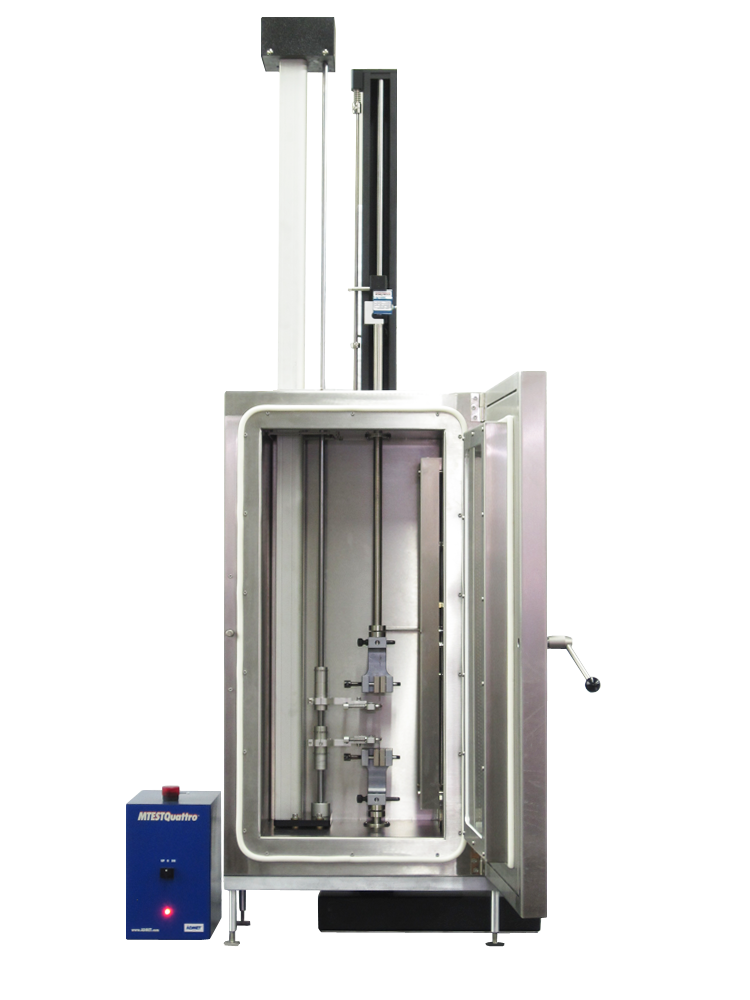
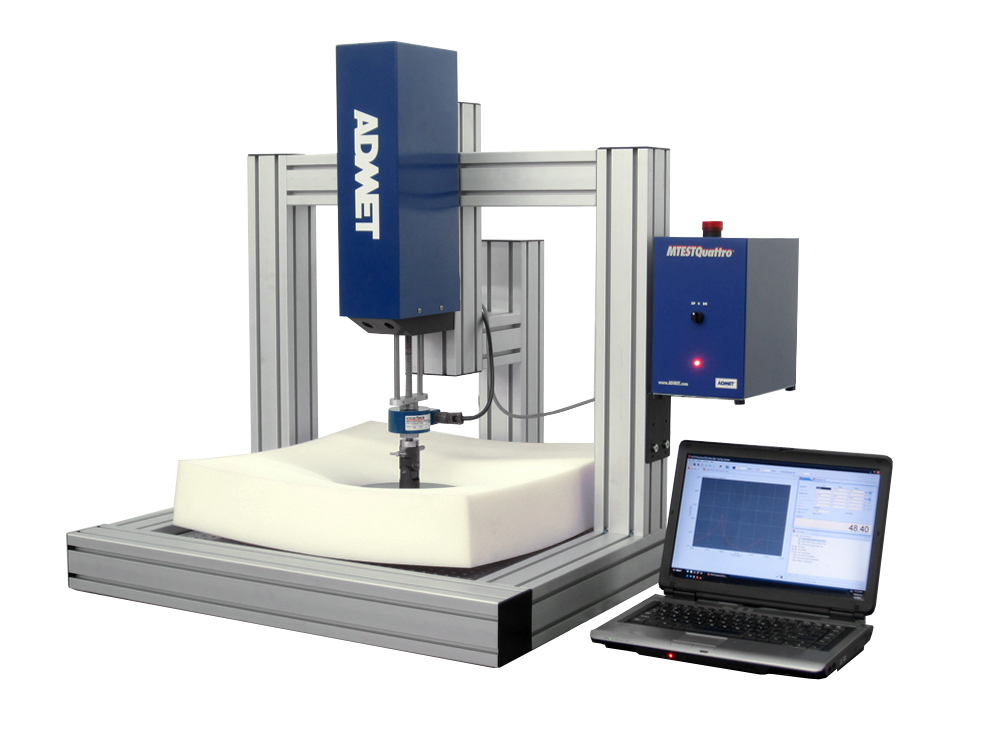
 ADMET testing systems are utilized for tests that require both static and fatigue testing profiles. Common test types include compression, bend, shear, torsion, and biaxial. Users can easily set up testing profiles or utilize preset templates that have multiple segments, cyclic, ramp, sinusoid, or sawtooth waveforms. They can also adjust control gains and end point values on the fly or activate amplitude control to automatically adjust the end point values to ensure that desired targets are met. ADMET’s testing systems can be configured with numerous grips, fixtures, and other accessories including a T-slot table, fluid bath, heating and cooling chamber, fixtures for F1717, F2077, F543.

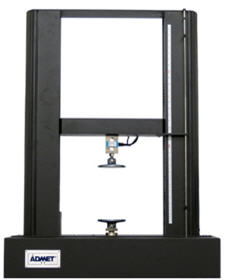
ADMET testing systems

"ADMET’s systems are already being used in many research and production environments. We're finding that its cyclic testing capabilities are especially popular since it gives researchers an efficient way to certify their products to meet customer requirements and industry standards" said Richard Gedney, ADMET founder and president.

About ADMET
ADMET Inc., founded in 1989 and based in Norwood, Mass., combines high-quality products and services to deliver the most efficient and cost effective materials testing systems. Its products range from universal testing frames, to software and specialized control units, as well as grips and fixtures. Highly skilled engineers provide customers with personalized research and development services and support to make ADMET the most responsive materials testing equipment supplier. 

ADMET's loyal customer base includes leading manufacturers, testing labs, researchers and universities in aerospace, automotive, biomedical, concrete, construction, metals, plastics, textiles and other industries. ADMET's products are widely distributed in North America, Central and South America, Europe, the Middle East and the Pacific Rim. ADMET can be reached at 781-769-0850 Ext. 21, sales@admet.com or by visiting http://www.admet.com.

ADMET logo


Planar Biaxial Testing System for Biological Tissue

  | Share on Twitter Twitter | Submit to Digg digg it |  Add to delicious  delicious |  Submit to StumbleUpon StumbleUpon |  Share on LinkedIn LinkedIn | Submit to Reddit reddit 

Constitutive models are necessary to predict the mechanical behavior of biological tissues. However, biological materials present challenges in constitutive modeling due to their complex mechanical behavior. Their oriented fibrous structures often exhibit pronounced mechanical anisotropy. Due to anisotropy, stress strain data generated from uniaxial tests cannot be used to extrapolate to generalized three-dimensional constitutive equations. Since biological tissues are generally considered incompressible, planar biaxial testing allows for a two-dimensional stress-state that can be used to characterize their mechanical properties and validate the constitutive models.

Planar Biaxial Diagram
Figure 1 - Diagram of a planar biaxial test setup. 

Biaxial stress-strain measurements on soft biological tissues are generally difficult to perform. Some of the challanges include: small specimen sizes; gripping the specimens; differing gripping techniques producing inconsistent results; identifying material axes; large specimen-to-specimen variability; time-dependent changes due to biological degradation; and achieving homogeneity of deformation within the specimen. 

Biaxial testing of biological tissues is performed using thin specimens, which are either a membrane in its native form or a thin section prepared from a thick tissue slab. The specimen is mounted to the biaxial device in trampoline-like fashion using thin threads (Figure 1), which allows the edges to expand freely in the lateral direction. Testing is generally performed with the specimen completely immersed in phosphate buffered normal saline (pH 7.4) at room or body (37◦C) temperature. The central target region must be sufficiently small and located away from the outer edges to avoid the tethering effects. Thus, in the central target region the stress and strain field is generally considered homogeneous.         


Planar Biaxial Test System


 Figure 2 - ADMET planar biaxial test system general arrangement. 

ADMET's planar biaxial testing system is designed specifically for soft materials and biological tissues. The two orthogonal actuators can be programmed to move independently or in a coordinated motion under force or defromation control. The testing system includes suture racks for gripping the specimen in trampoline like fashion. The suture racks are pinned to the moving crossheads for easy installation and removal. Specimen baths and heating and cooling units for precise temperature control are also available. Various low force load cells and optical strain measurements provide accurate force-deformation data.  

If you would like to ask an engineer a question or request more information regarding planar biaxial testing, please contact ADMET at 1-800-667-3220 or info@ADMET.com

More testing news

More testing specifications 


All Posts